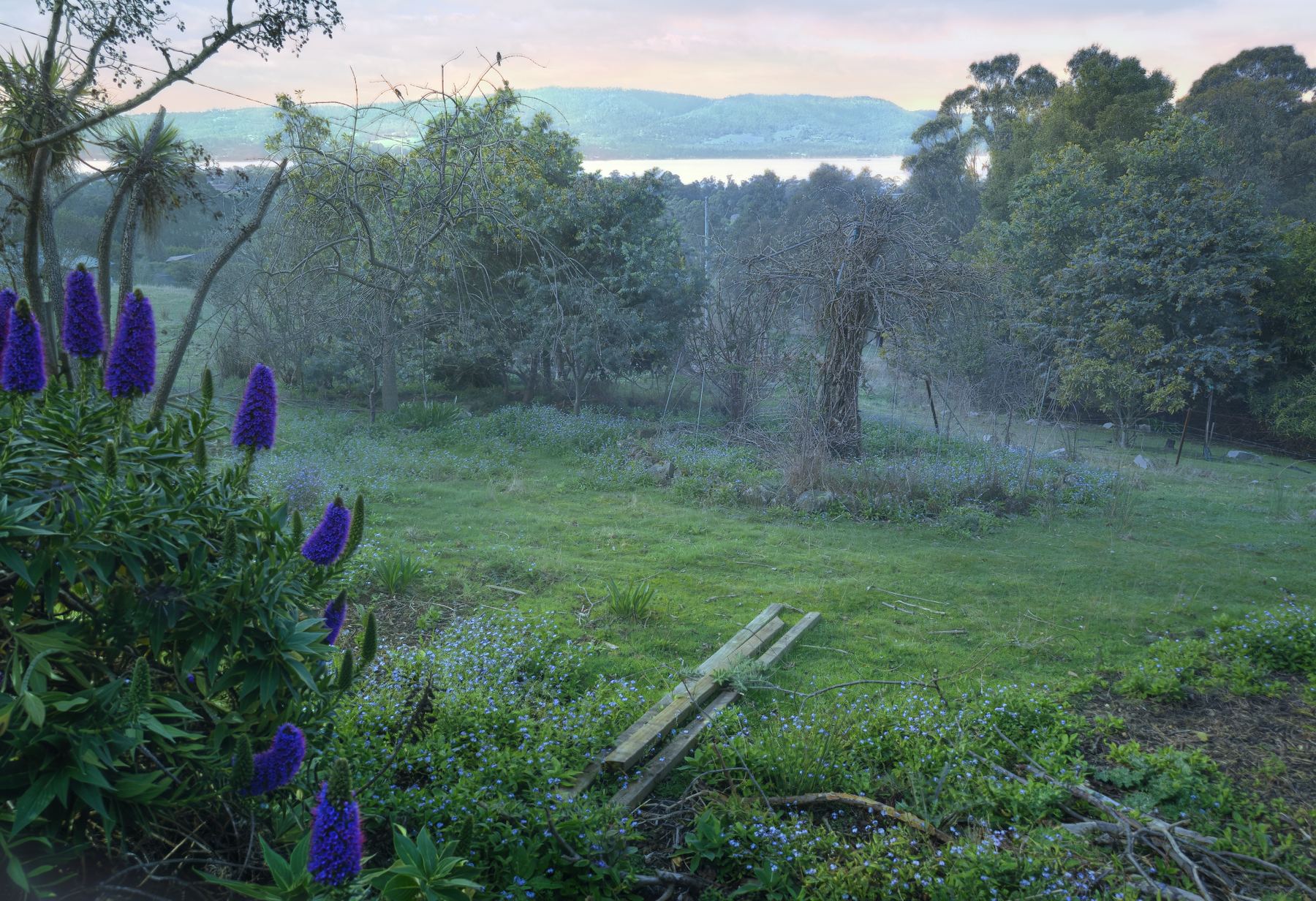
Six acres
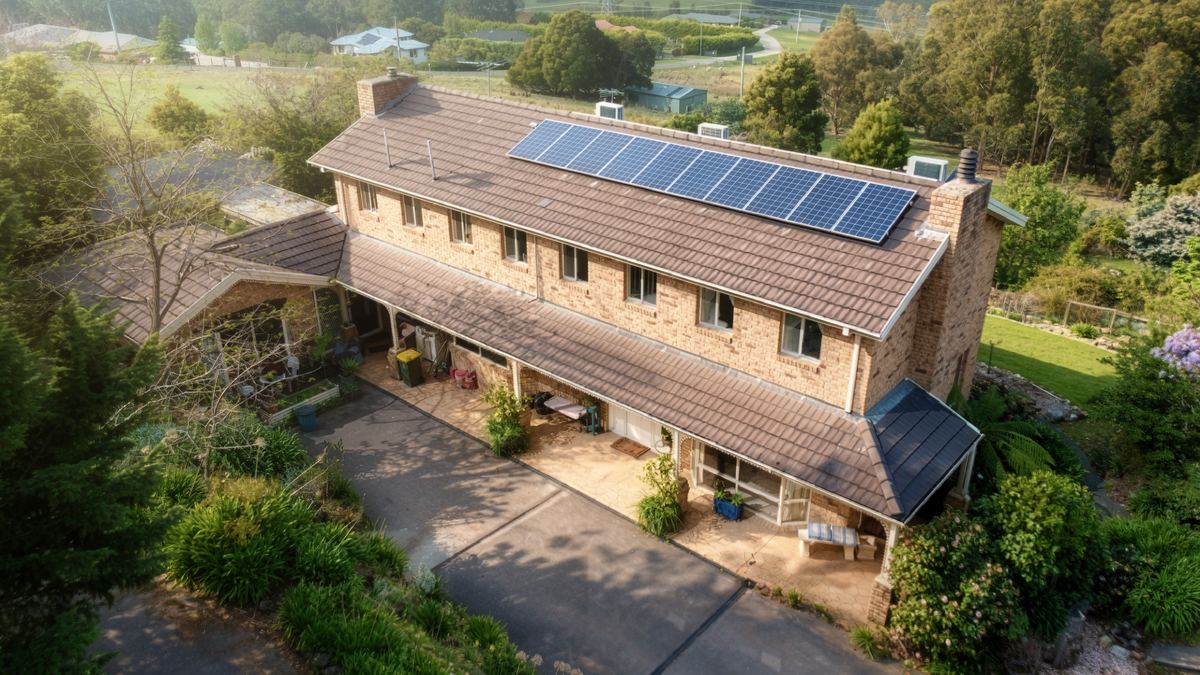
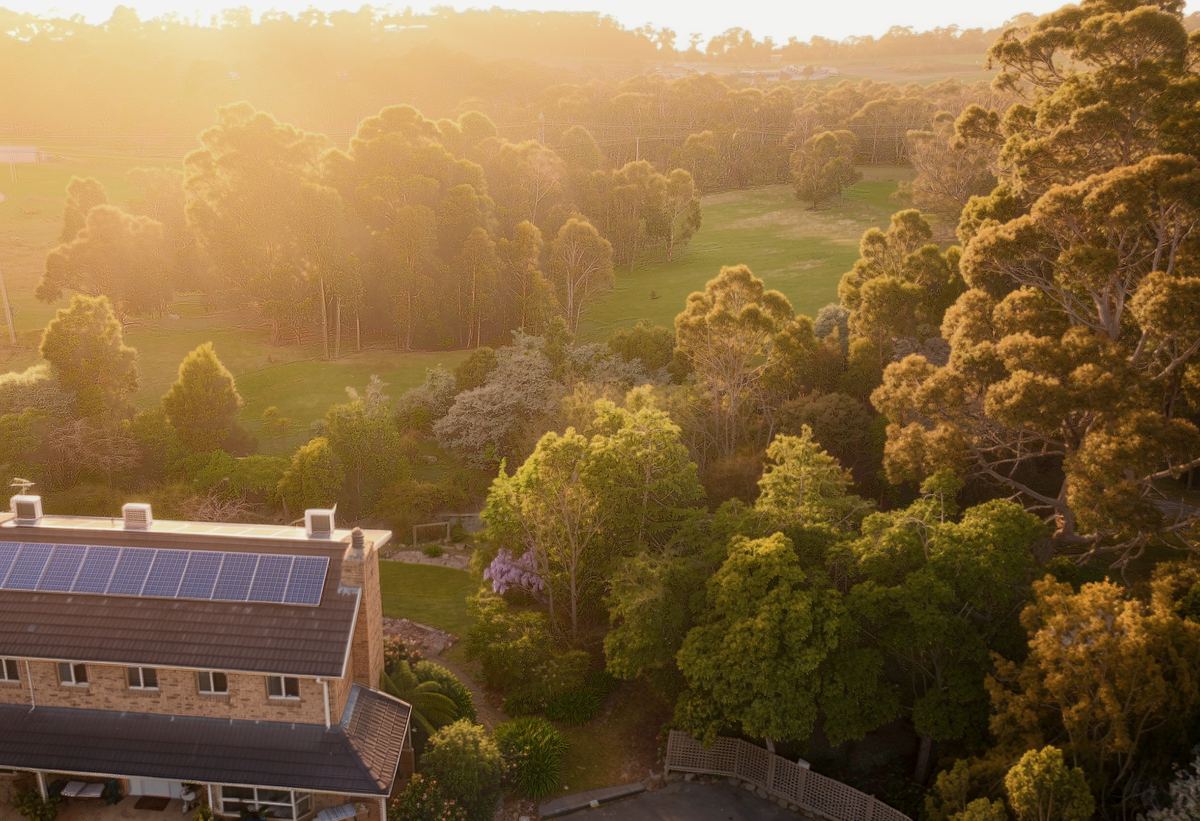
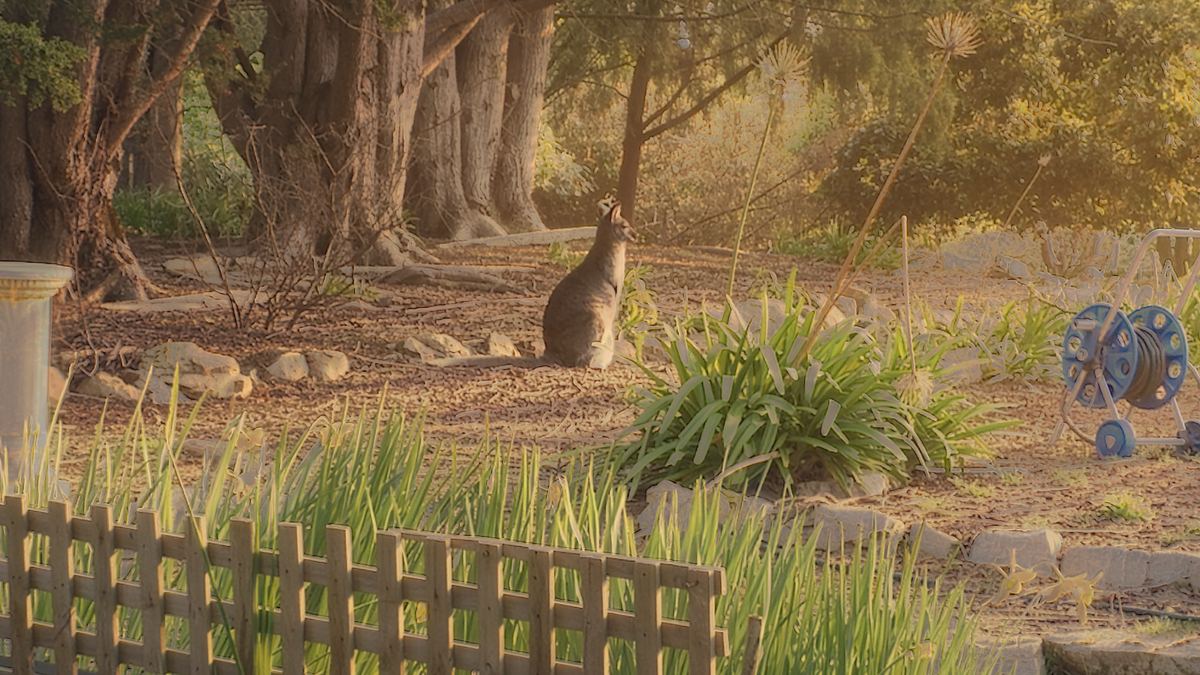
There are six acres here. About an acre of it is garden, and the rest runs down the hill in paddock. You're welcome anywhere on it. Very little of it needs mowing — the wallabies see to that.
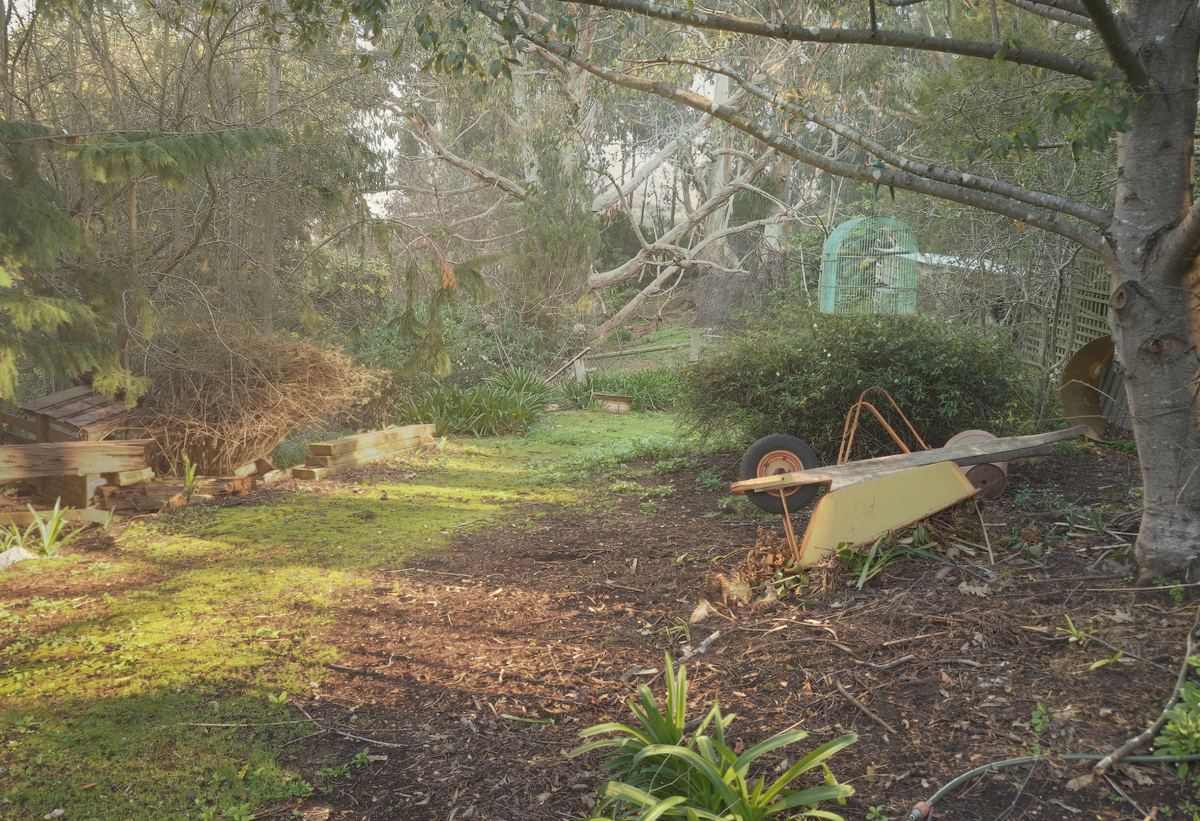
Five minutes will get you round the garden, if walking round it is all you want. Half an hour if you stop at the plants, and at the made things tucked in among them. Rather longer if you find one of the seats and don't get up again. It isn't a big garden. It's just more interesting than its size would lead you to expect.
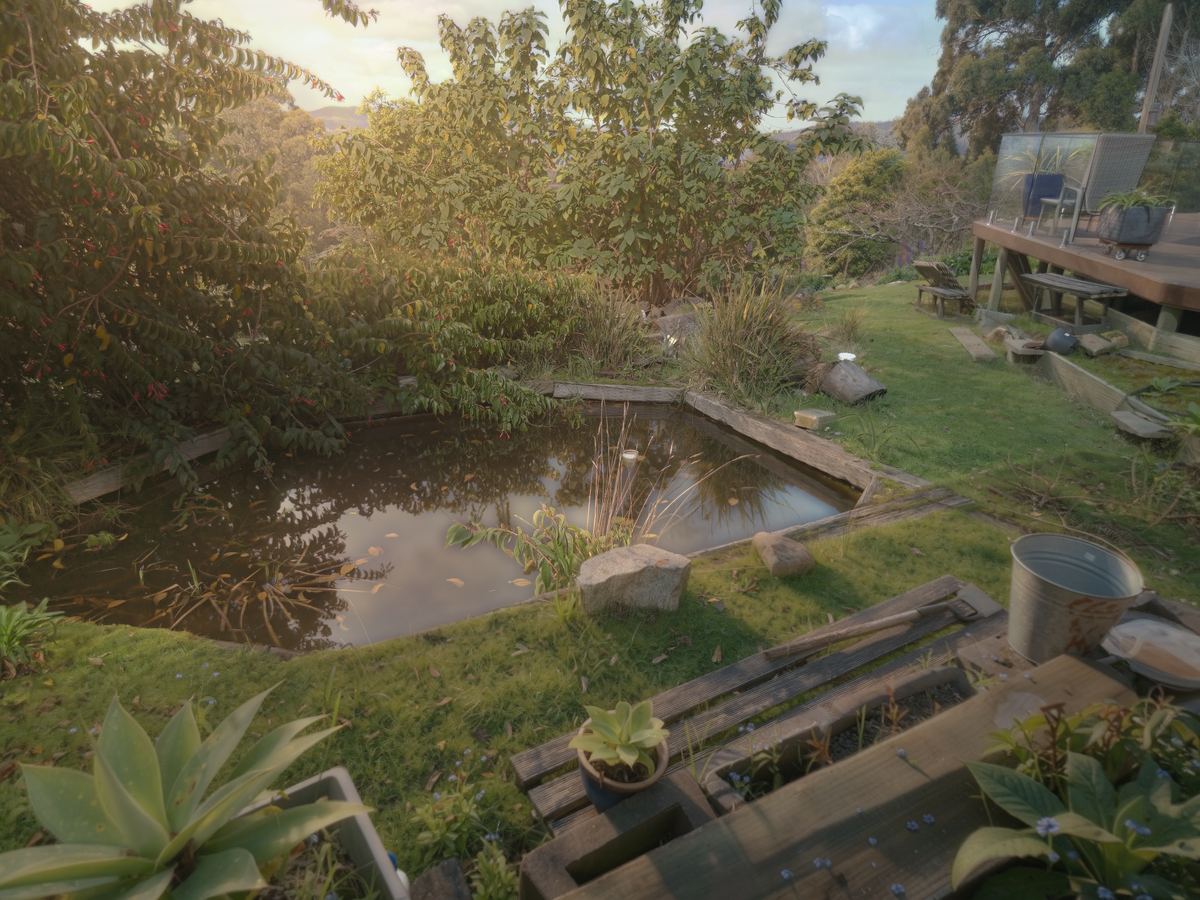
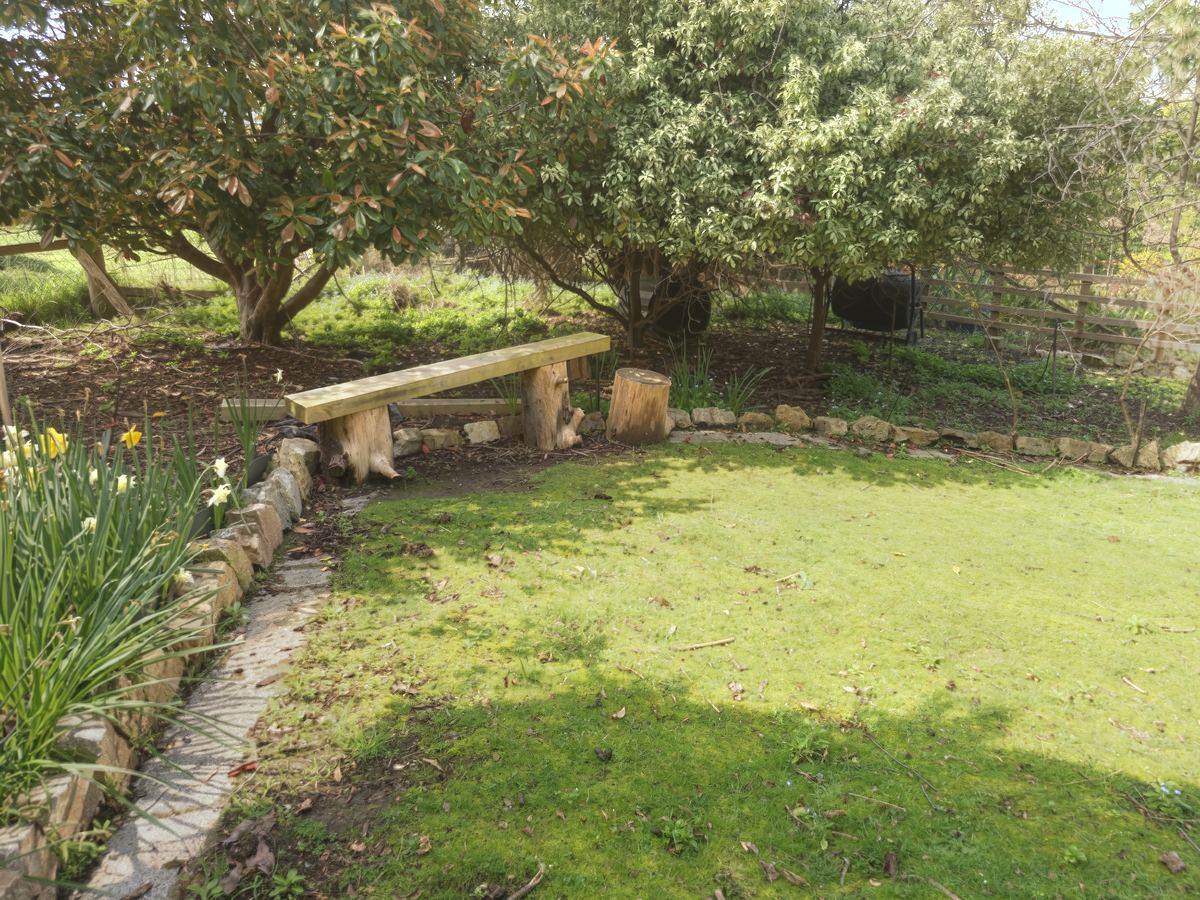
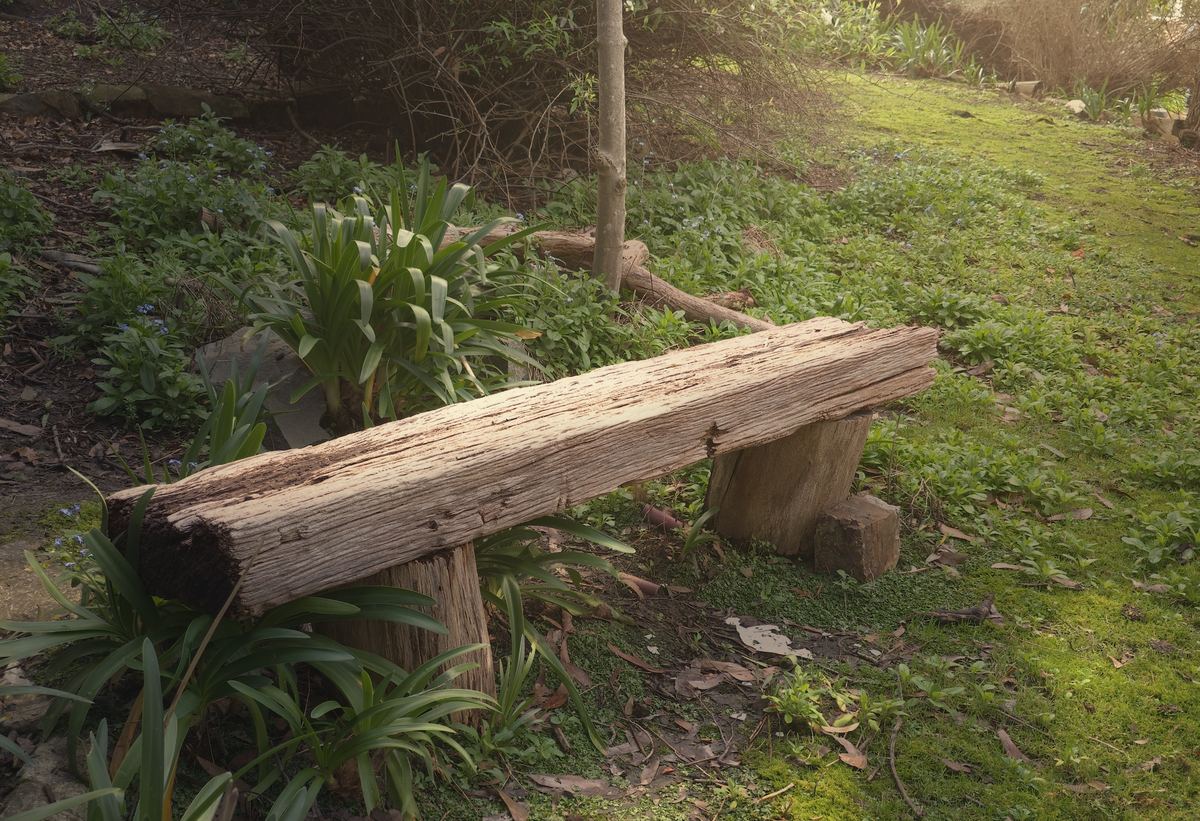
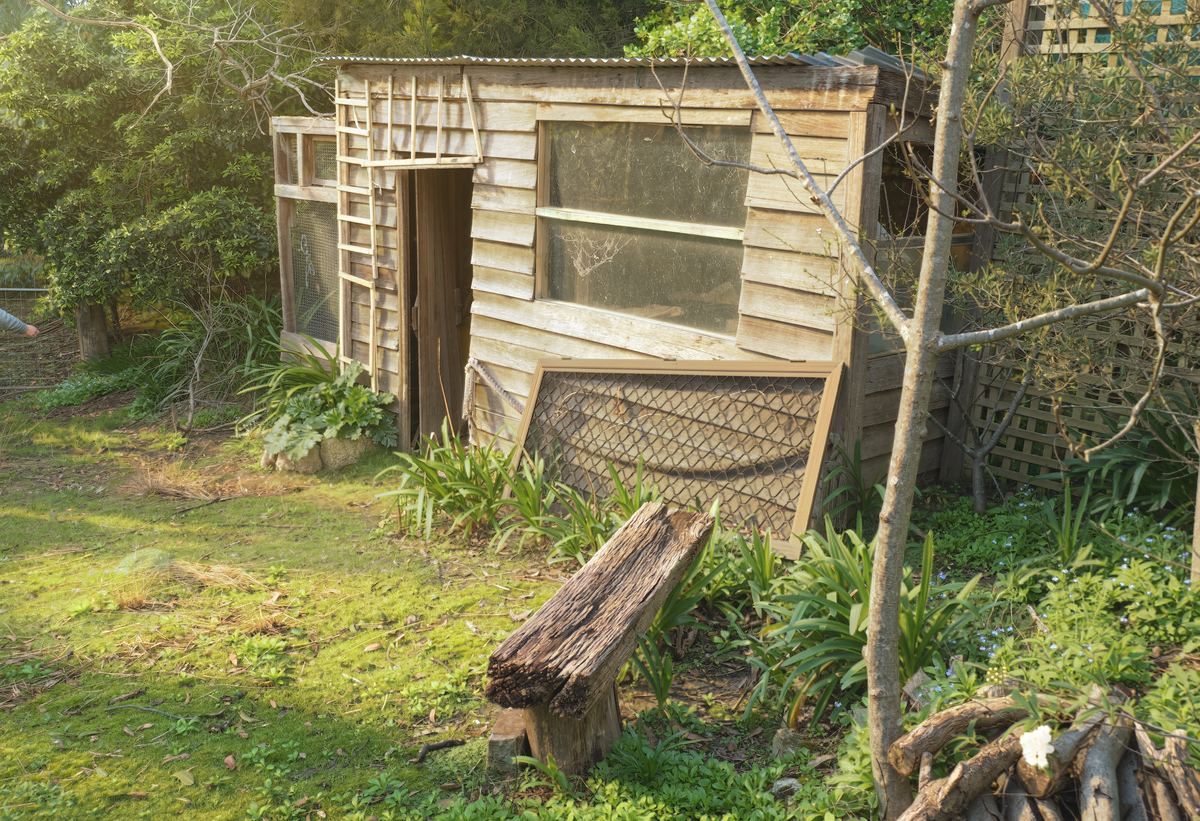
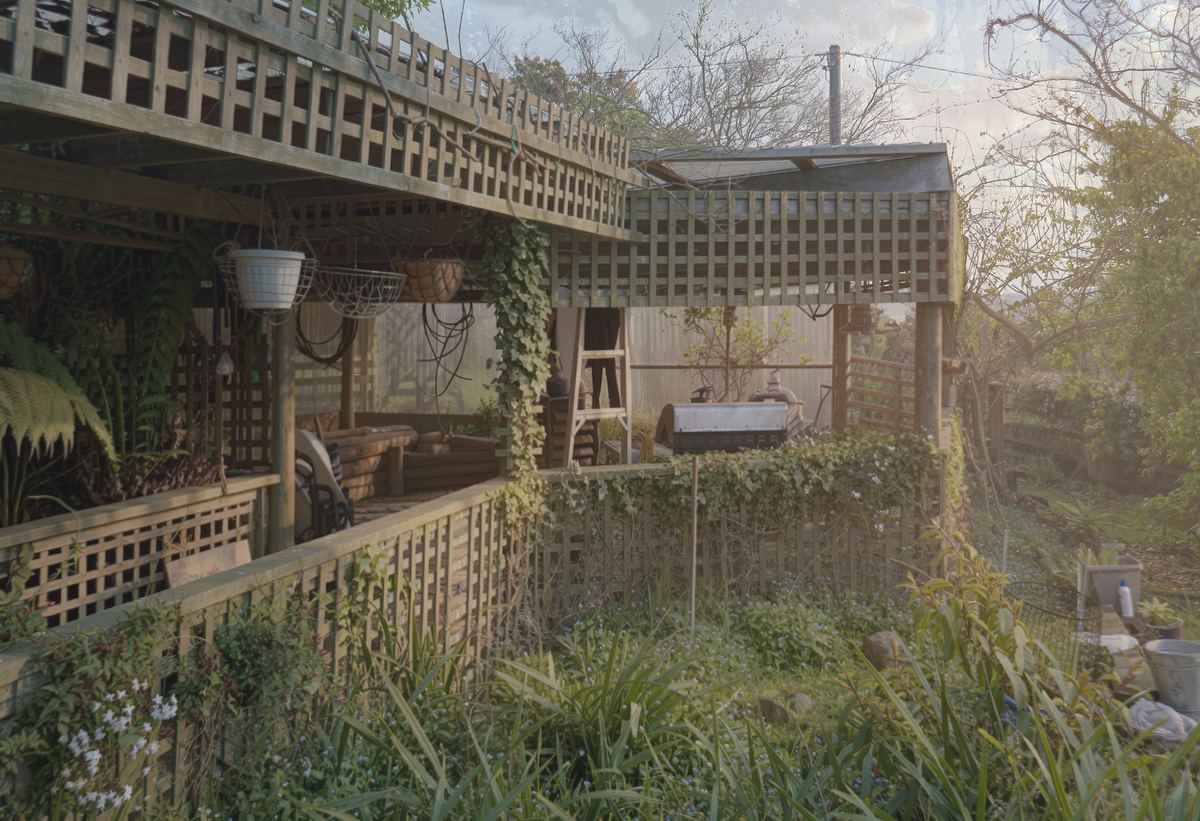
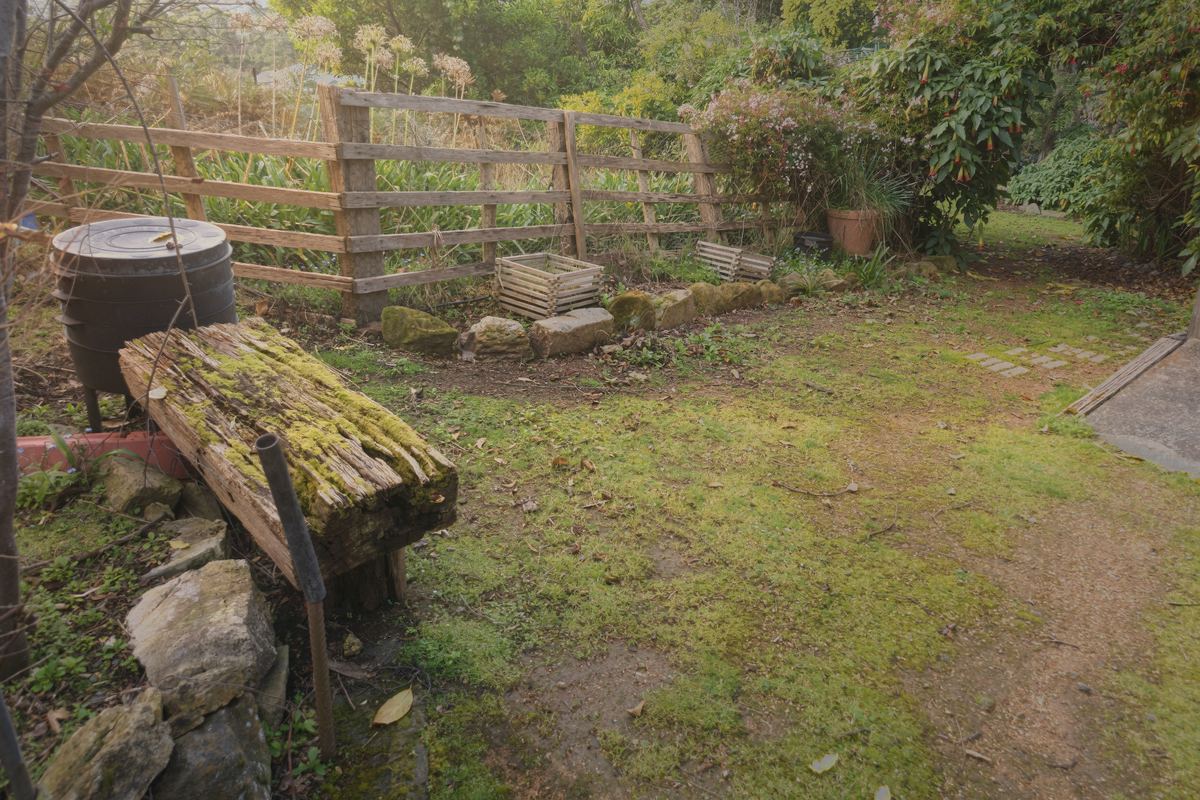
There's a pond cut into the lawn with the channel behind it, an old timber shed down among the trees, and split-log seats put where somebody clearly sat and decided a seat belonged there.
The wallabies
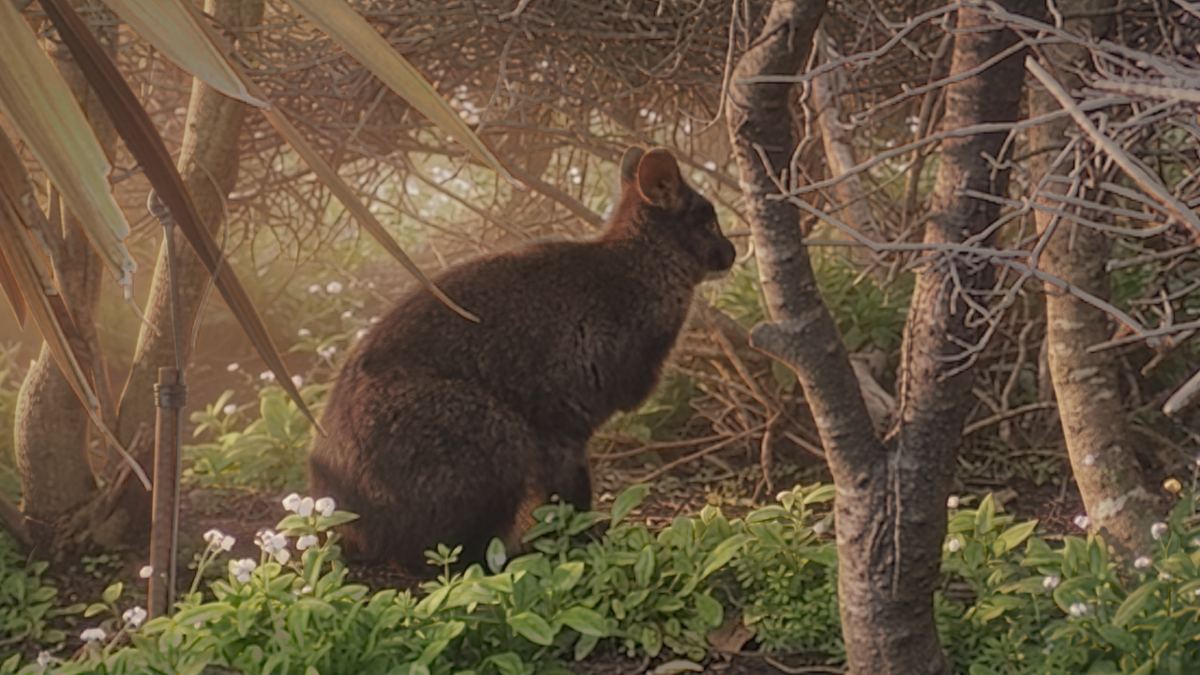
Come out at dusk and there'll often be ten or fifteen of them on the grass, and again first thing. They're easily startled, but they can tell the difference between someone stalking them and someone just pottering about. Walk as though you're looking for something on the ground, take your time, and they'll usually let you get closer than you'd expect. Not close enough to touch — nobody gets that — but close.
There are pademelons and Bennett's wallabies about as well, possums after dark — you'll hear them arguing — and blue-tongue lizards in the warm months. We saw our first echidna last year. None of it's arranged, and some evenings there's less of it, but the wallabies are fairly consistent.
The view
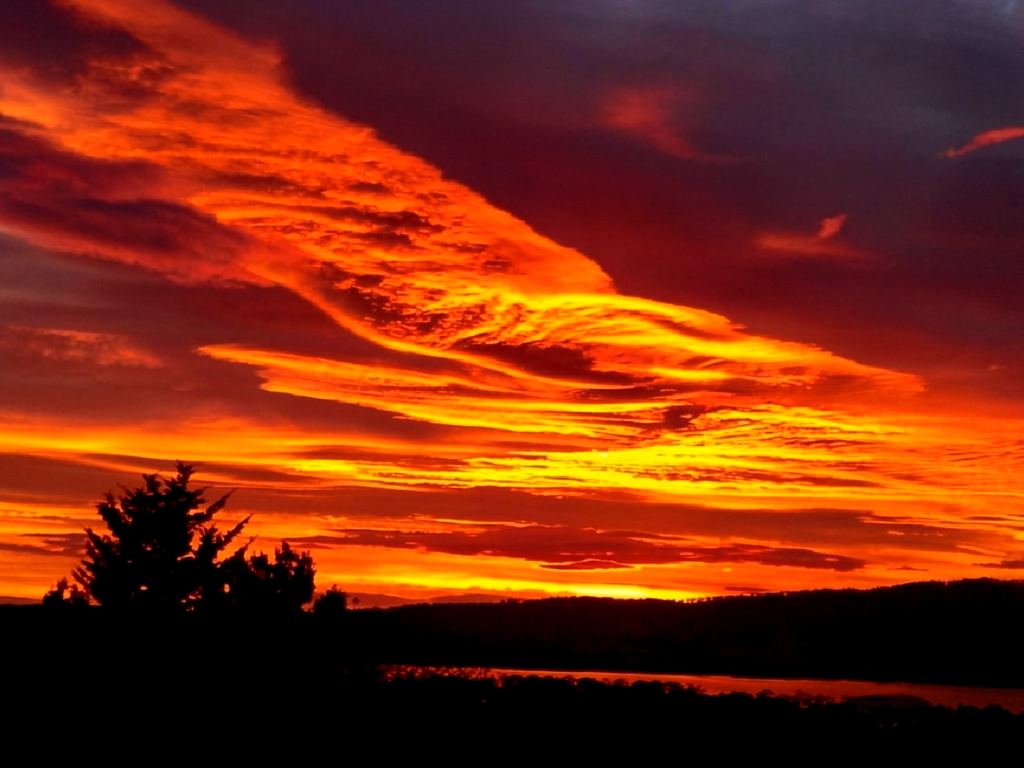
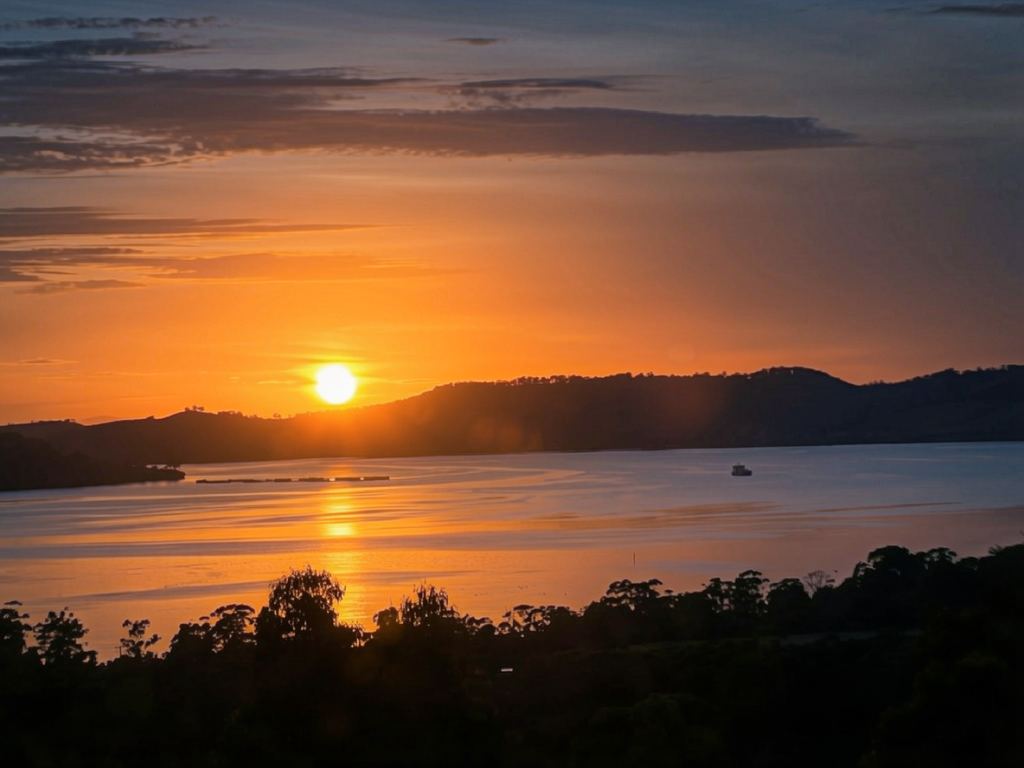
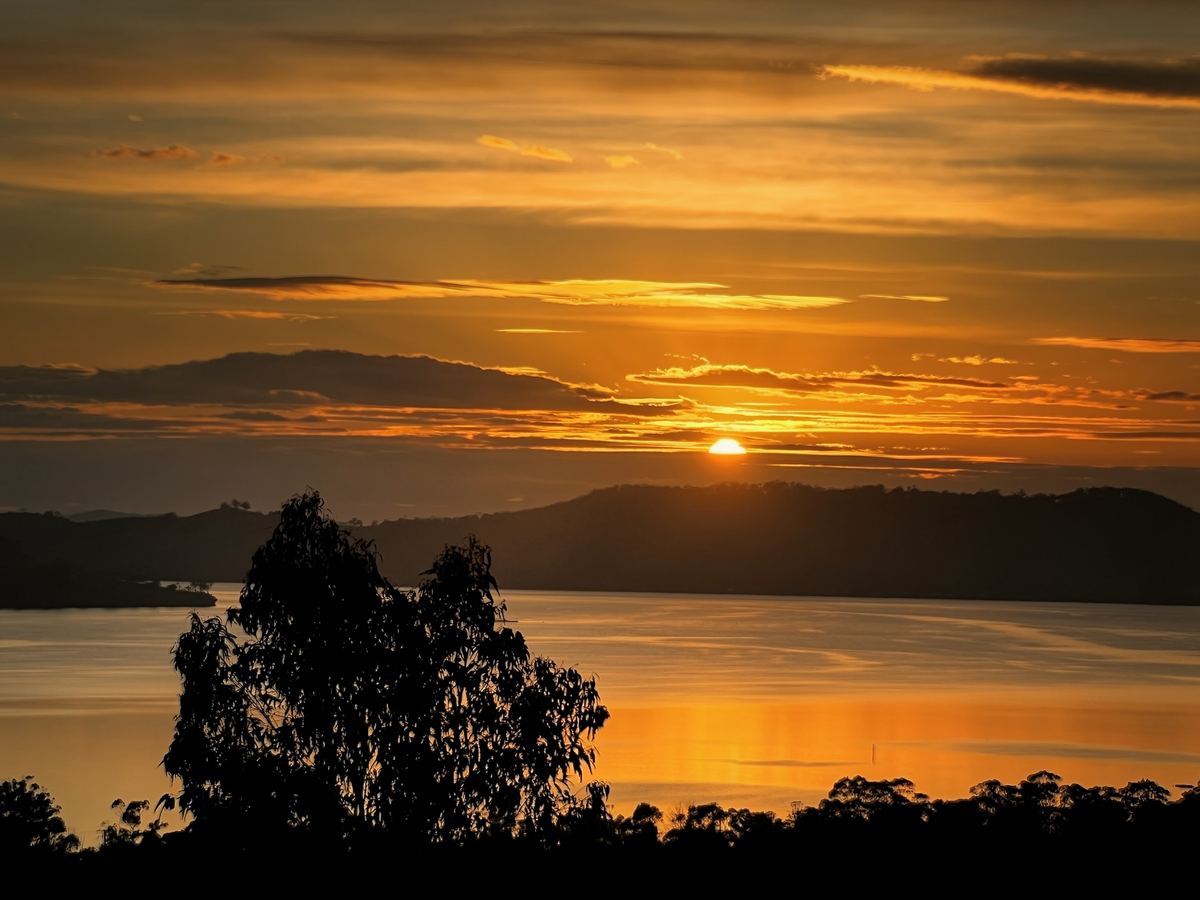
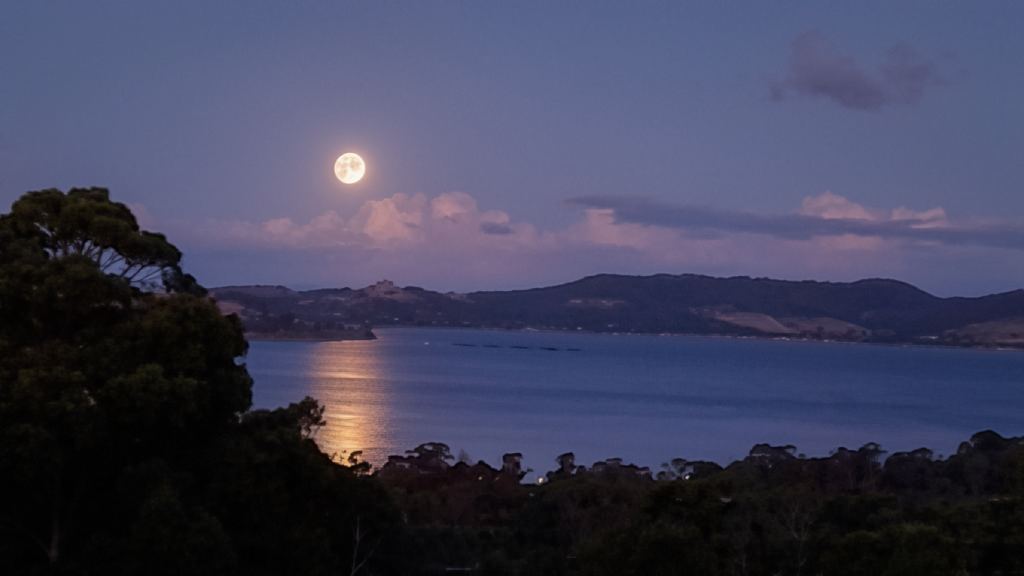
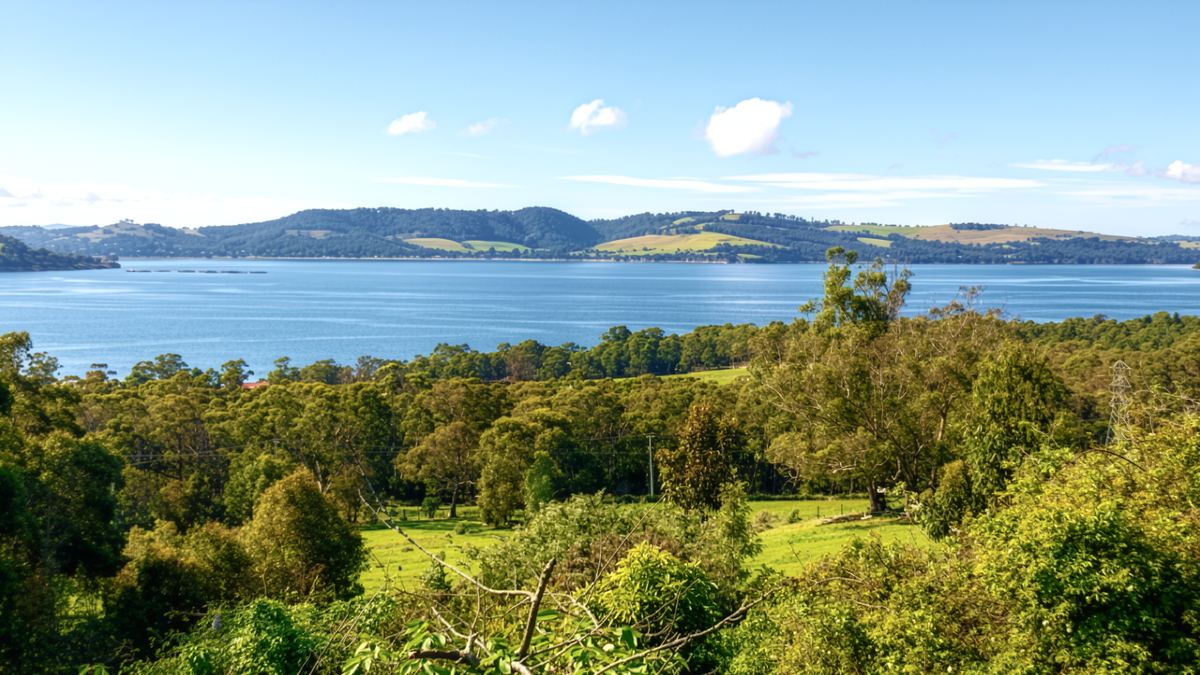
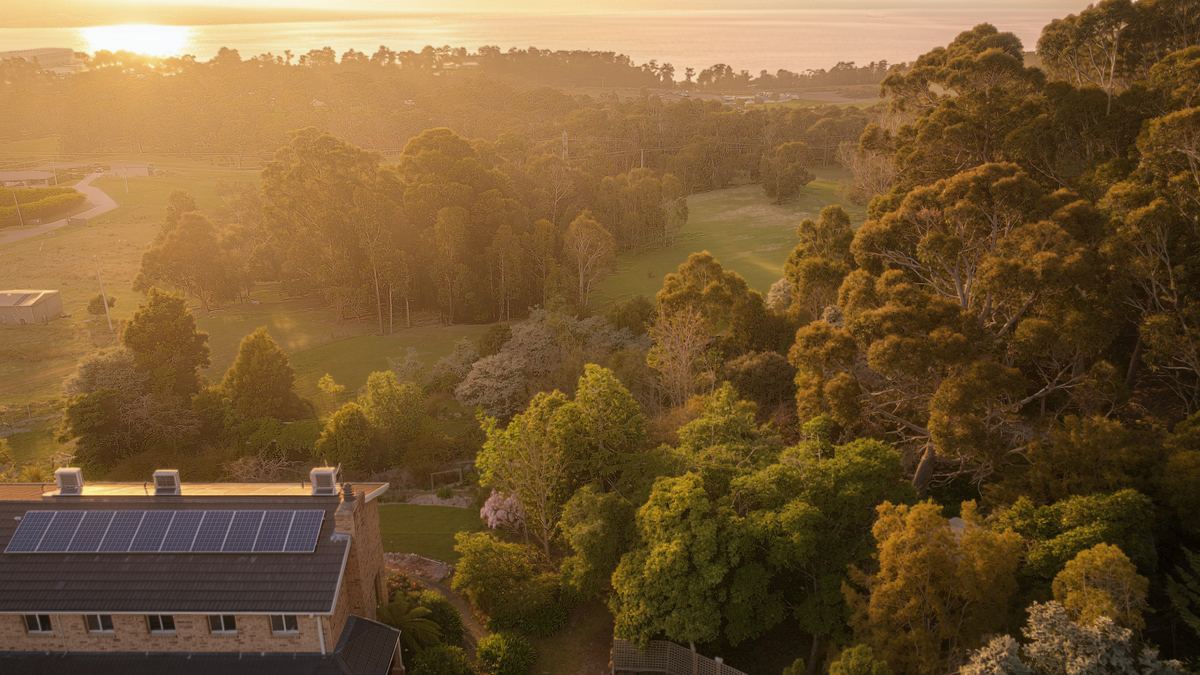
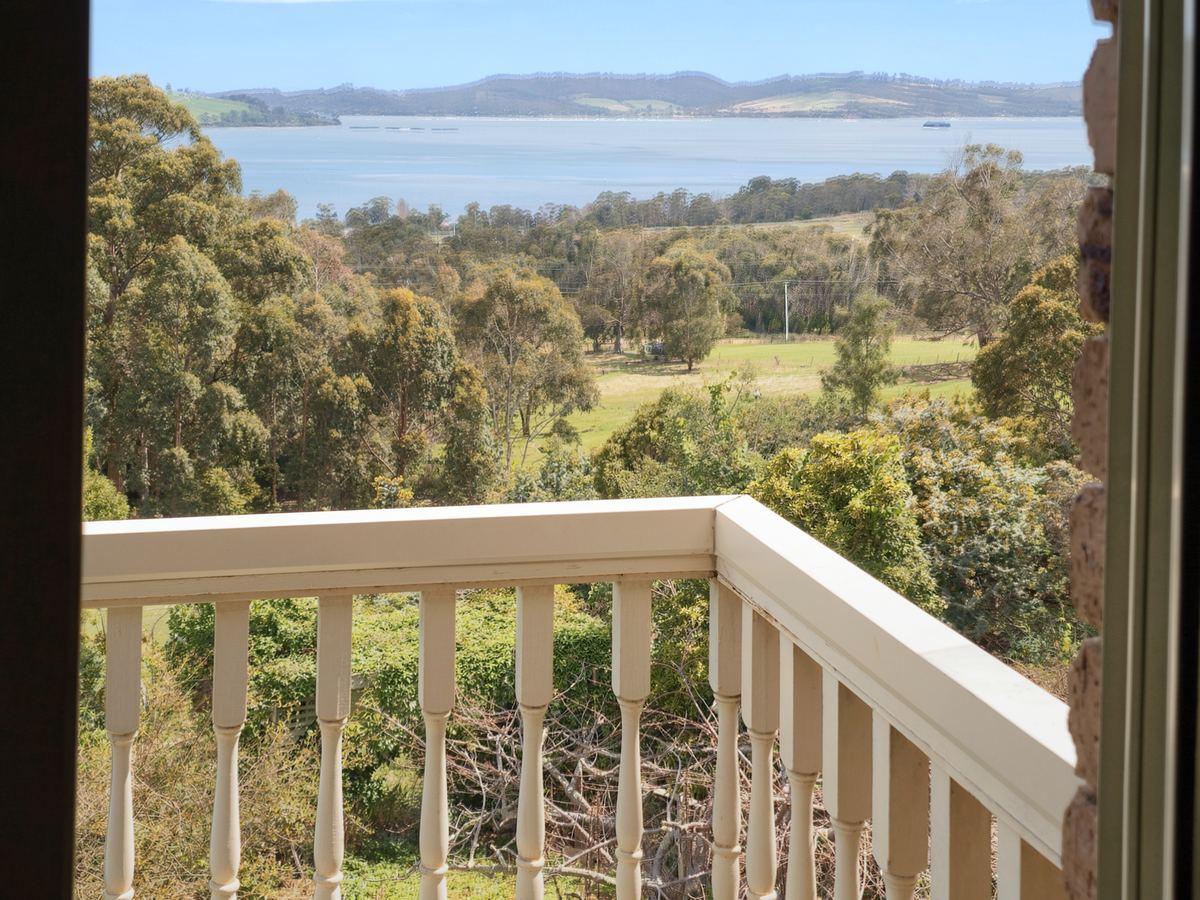
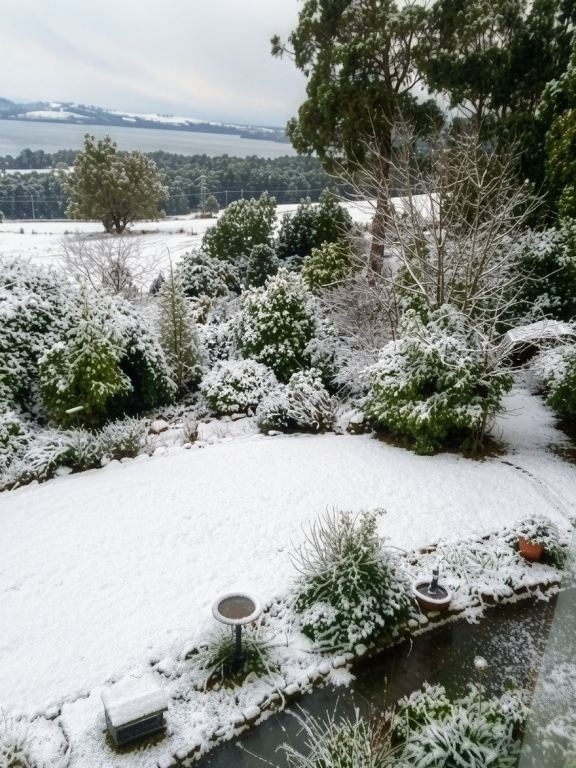
From the house you look over the garden, across the paddocks and the bush, and down the channel to Bruny Island. You can pick out the gap between the island and the mainland, and on a clear day two peaks a long way south at the Tasman.
The salmon pens are out in the bay. Everyone asks what they are. The boats go out to them every morning, early.
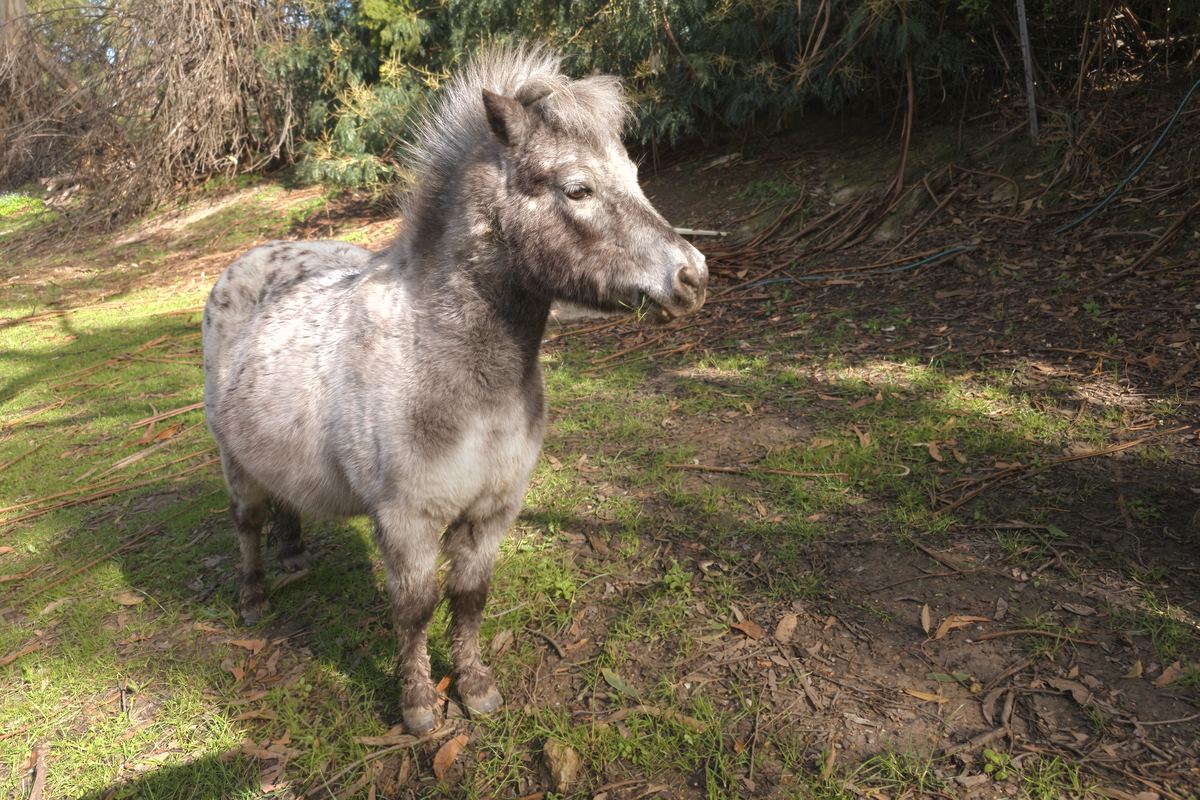
The horses
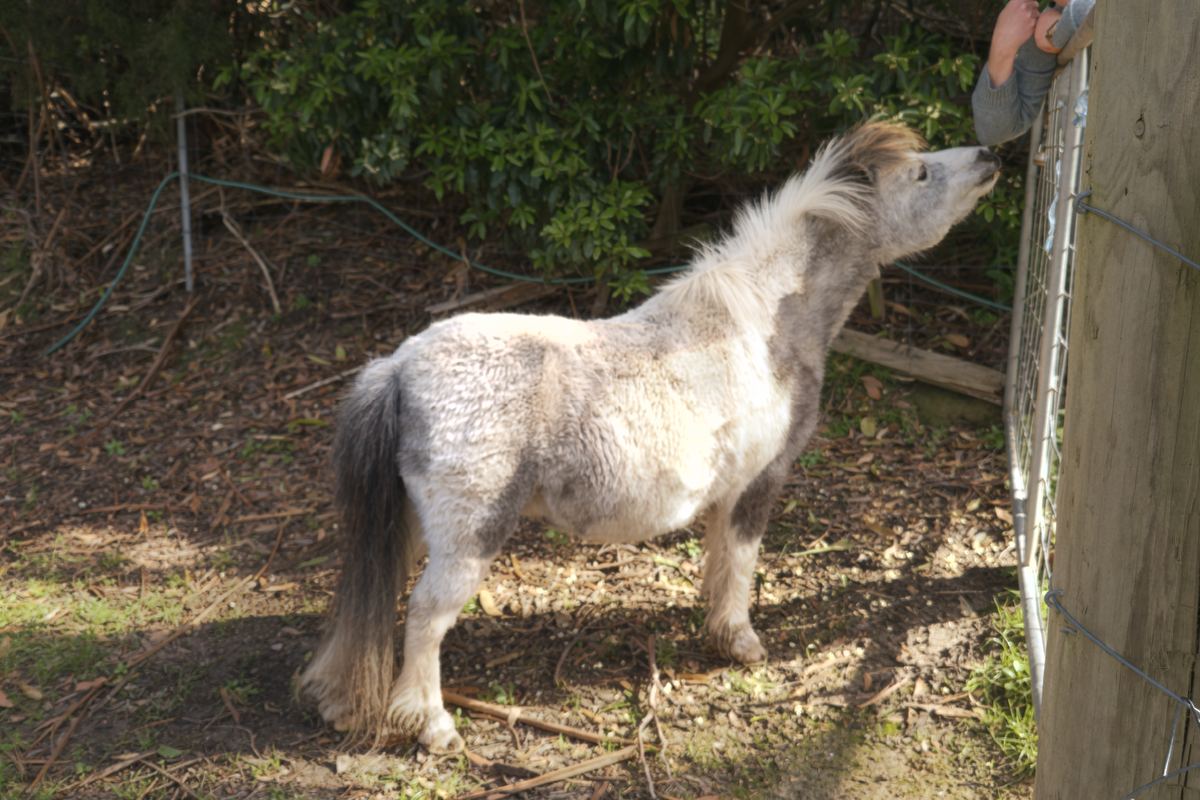
There's a mown track down to the bottom paddock, which we let out for agistment. Whoever's grazing down there isn't ours, but you're welcome to go to the gate and say hello properly.
If you know your birds
There's a wedge-tailed eagle pair, and a goshawk that works the back of the property. Striated pardalotes, spinebills, honeyeaters, rosellas, butcher birds and currawongs. A pair of kelp gulls nest on the tin roof every year.
We've had a few birdwatchers stay. The Bruny Island Bird Festival runs every second March — the next one's in 2028 — and March is our best month for weather anyway. Bring the binoculars. You won't need to go anywhere.
Around the garden
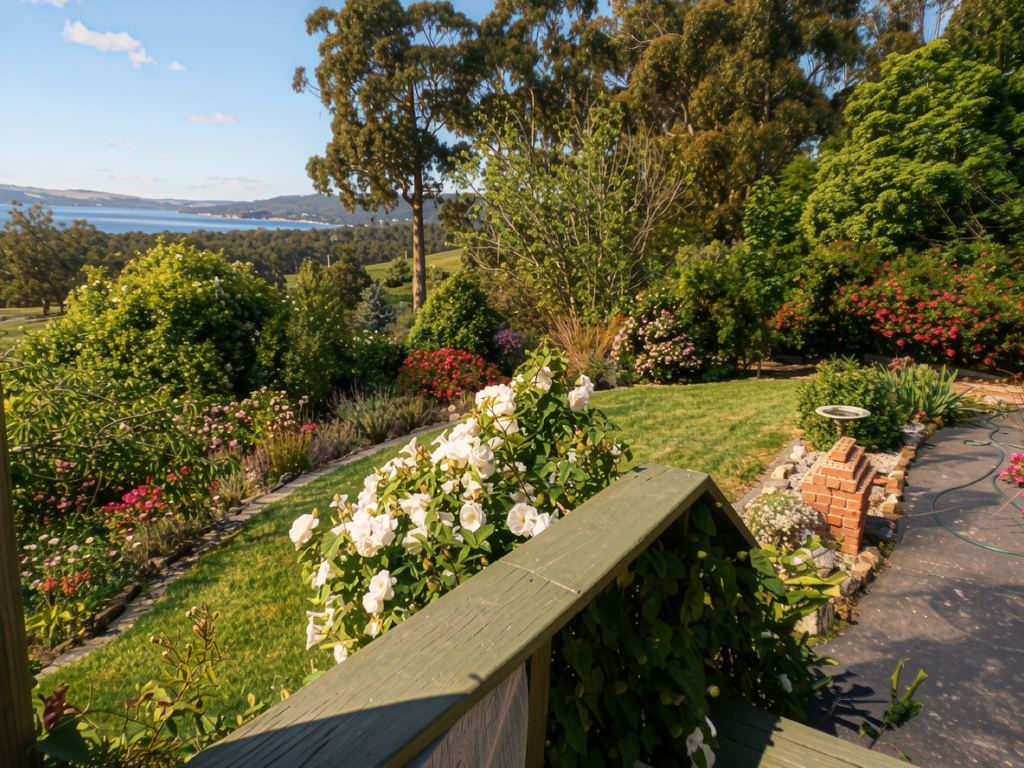
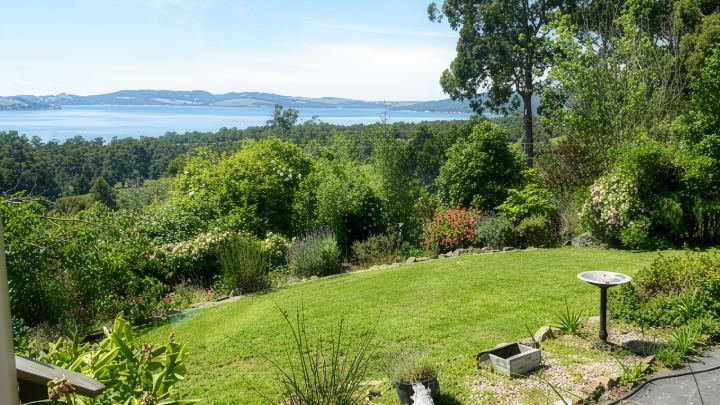
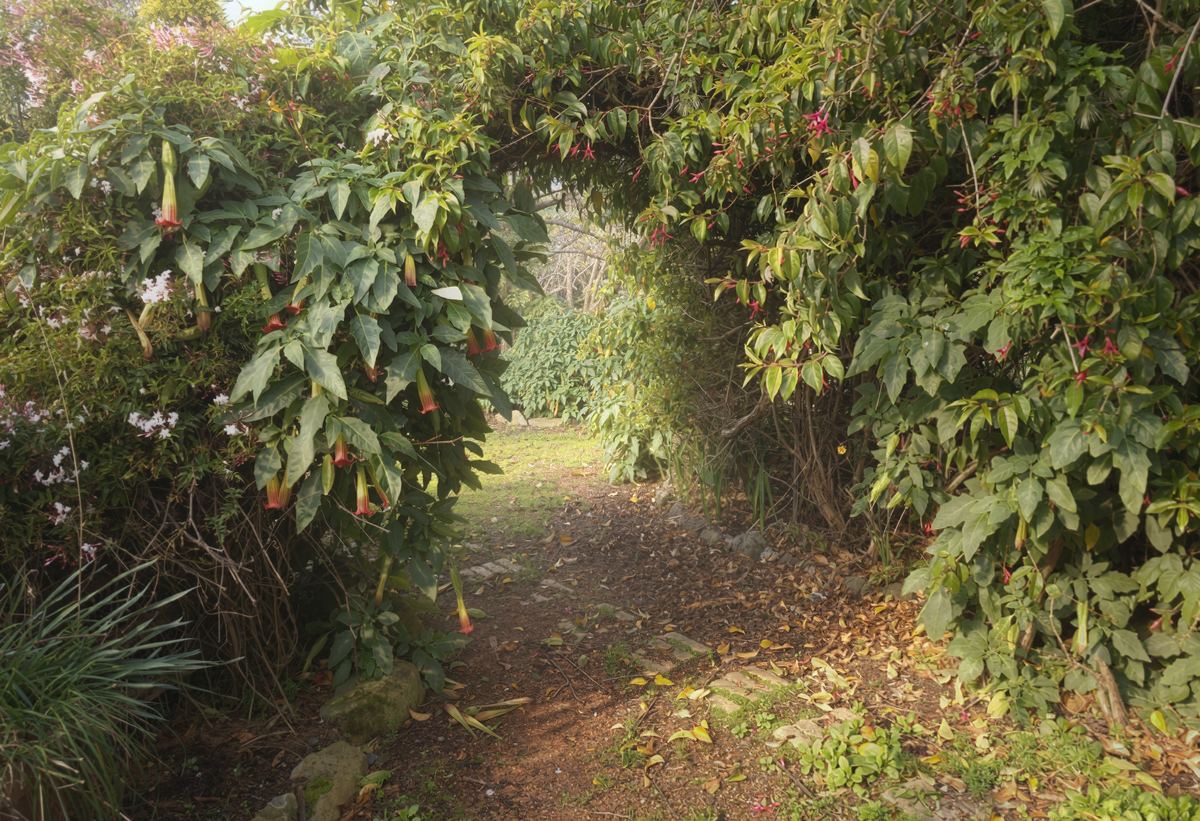
Click any photograph to see it larger.
Morning, night, and from above